Revolutionizing business with wearables, wearable devices have transcended their role as mere personal accessories to become a transformative force in business. Smartwatches ensure employees stay connected and maintain their health, while augmented reality (AR) glasses provide immersive training experiences. Across industries, wearables redefine efficiency, safety, and customer interaction. Customized wearable apps are instrumental in unlocking the full potential of these devices, tailoring their functionality to meet precise business needs and objectives.
Boosting Productivity with Custom Apps
The key to maximizing wearables’ impact on productivity lies in tailored app development. Custom wearable apps can streamline operations, from enabling sales staff to access inventory data on their smartwatches to allowing factory workers to receive real-time alerts on safety hazards through their AR glasses. This personalization ensures that wearables integrate seamlessly into the workflow, enhancing efficiency without disrupting established processes.
Revolutionizing Training through AR
In the realm of training and development, wearable app development is a game-changer, especially with AR wearables. Custom AR apps can create realistic training simulations for a variety of professions, from surgeons practicing complex procedures to mechanics diagnosing engine faults. These applications not only make training safer and more cost-effective but also more engaging and effective, leading to better retention of skills and knowledge.
Ensuring Safety with Wearable Technology
Wearable app development is crucial in leveraging technology for workplace safety. By developing apps that monitor environmental conditions and workers’ physiological signs, businesses can preemptively identify potential hazards. For instance, a custom app for smart vests could alert construction workers when they are overexerting themselves or when they need to evacuate due to environmental dangers. This proactive approach to safety can significantly reduce workplace accidents and health issues.
Personalizing Customer Experiences
In customer-facing sectors like retail and hospitality, wearable apps offer a new dimension of service personalization. For example, apps designed for smart badges in resorts can facilitate check-ins, unlock rooms, and even personalize room settings based on guest preferences. Similarly, retail associates equipped with smartwatches can use apps to access customer histories and preferences, enabling them to provide suggestions and assistance tailored to each shopper.
Empowering Data-Driven Decisions
The integration of wearables and custom apps into business operations generates valuable data, providing insights into employee efficiency, customer behavior, and process bottlenecks. This data, when analyzed, informs strategic decisions, helping businesses optimize their operations and tailor their offerings to meet market demands. Moreover, the agility of wearable app platforms allows for rapid updates and adjustments, ensuring businesses can quickly adapt to new insights or changing conditions.
Navigating Challenges
While wearable app development opens up new avenues for business innovation, it also presents challenges, particularly in terms of privacy, data security, and user adoption. Developing apps that respect user privacy and secure sensitive data is paramount. Furthermore, businesses must invest in training to ensure employees are comfortable and proficient with these new tools, addressing any resistance to technology adoption head-on.
Conclusion
Wearable technology, powered by custom app development, is setting a new standard in business operations, employee well-being, and customer service. As the capabilities of these devices expand, so too does the potential for businesses to innovate and improve. By focusing on the development of bespoke apps that cater to specific business needs and address the challenges of privacy and adoption, companies can fully leverage the benefits of wearables, securing a competitive edge in the digital era.
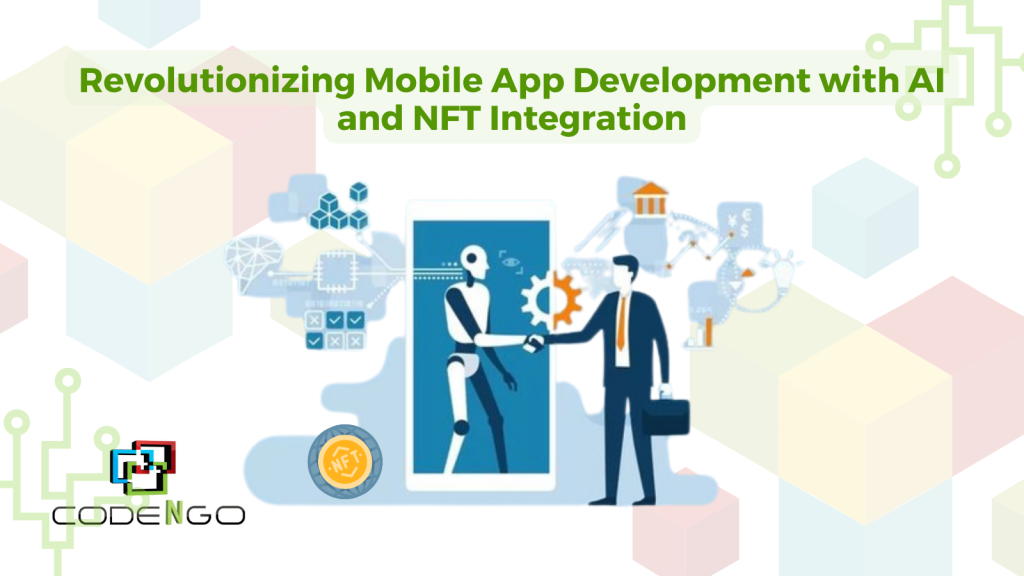
Revolutionizing Mobile App Development with the integration of Artificial Intelligence (AI) and Non-Fungible Tokens (NFTs) is reshaping the landscape of mobile app development, marking a significant milestone in its ongoing evolution. These cutting-edge technologies offer developers an unparalleled opportunity to craft mobile experiences that are not only more personalized, secure, and engaging but also open up a realm of endless possibilities. In this article, we delve into the transformative impact of AI and NFTs on mobile app development, exploring how they are revolutionizing the industry and paving the way for innovation.
AI-Powered Personalization
AI algorithms have the capability to analyze vast amounts of user data to understand preferences, behavior patterns, and interests. By leveraging AI-driven insights, mobile apps can deliver highly personalized experiences tailored to individual users. From recommending content and products to customizing UI elements, AI empowers developers to create apps that adapt and evolve with each user interaction. For example, AI-powered chatbots can provide personalized assistance, while recommendation engines can suggest relevant content based on user preferences, enhancing user engagement and satisfaction.
Enhanced Security with NFTs
NFTs, built on blockchain technology, offer a novel solution to enhance security and authenticity within mobile apps. By tokenizing digital assets, NFTs enable developers to create unique, tamper-proof identifiers for various in-app items, such as collectibles, virtual goods, and exclusive content. This not only protects against counterfeit or unauthorized duplication but also enables users to prove ownership and authenticity of digital assets. Additionally, NFTs can be used to create decentralized identity systems, providing users with greater control over their personal data and privacy.
Monetization Opportunities
The integration of NFTs opens up new avenues for monetization within mobile apps. Developers can create and sell limited edition digital collectibles, artwork, or virtual assets as NFTs, allowing users to buy, sell, and trade them securely on blockchain-powered marketplaces. Furthermore, NFTs enable developers to implement unique monetization models, such as royalties and revenue-sharing mechanisms, where creators earn a percentage of each subsequent transaction involving their NFTs. This not only incentivizes content creation but also fosters a thriving ecosystem of digital creators and collectors.
Gamification and Engagement
AI and NFT integration can significantly enhance gamification elements within mobile apps, driving user engagement and retention. AI algorithms can analyze user behavior in real-time to dynamically adjust game mechanics, difficulty levels, and rewards, ensuring a tailored and immersive gaming experience. By tokenizing in-game assets as NFTs, developers can enable players to truly own and trade their virtual possessions, fostering a sense of ownership and value. Additionally, NFT-based achievements, badges, and rewards can incentivize user participation and social interaction within gaming communities.
Challenges and Considerations
While the integration of AI and NFTs holds immense potential, developers must navigate certain challenges and considerations. Ensuring data privacy and security remains paramount, especially when leveraging AI algorithms to analyze user data. Developers must also address scalability issues associated with blockchain technology to accommodate growing user bases and transaction volumes. Moreover, educating users about the benefits and mechanics of NFTs is crucial to fostering adoption and trust within the mobile app ecosystem.
The fusion of AI and NFTs is transforming the landscape of mobile app development, offering unprecedented opportunities for personalization, security, monetization, and engagement. By harnessing the power of AI algorithms and blockchain technology, developers can create immersive, secure, and highly personalized experiences that resonate with users on a deeper level. As the mobile app industry continues to evolve, embracing AI and NFT integration will be key to staying ahead of the curve and delivering innovative solutions that enrich the lives of users worldwide.
Cross-Functionality emerges as a critical strategy in navigating the impending cookieless future. As the digital landscape evolves, businesses and marketers stand on the brink of significant transformation. Driven by increasing privacy regulations and a shift in consumer expectations towards data privacy, this future poses a unique set of challenges and opportunities. The necessity for a reevaluation of how organizations approach data collection, analysis, and utilization becomes evident. Embracing cross-functionality becomes imperative in ensuring businesses can continue to deliver personalized experiences, measure performance accurately, and maintain compliance with privacy standards throughout this transition.
The Transition to a Cookieless World:
The announcement by major browsers to phase out third-party cookies has sent ripples across the digital ecosystem. Third-party cookies have long been the cornerstone of digital advertising and analytics, enabling businesses to track user behavior across sites, deliver targeted ads, and measure campaign effectiveness. However, this reliance is set to change, prompting a reimagining of data strategies.
The Role of Cross-Functionality:
Cross-functionality refers to the collaboration and integration of different departments and skill sets within an organization to achieve common goals. In the context of a cookieless future, cross-functionality becomes crucial for several reasons:
Unified Data Strategy: With the decline of third-party cookies, organizations must rely more on first-party data collected directly from their interactions with customers. This shift necessitates a unified data strategy that aligns marketing, sales, IT, and data analytics teams. Collaboratively, these teams can develop a holistic approach to collecting, storing, and leveraging data in a way that respects user privacy and complies with regulations.
Technology and Tools: The transition away from cookies requires the adoption of new technologies and tools for data collection and analysis. Cross-functional teams can collectively evaluate and implement solutions such as Customer Data Platforms (CDPs) or Data Management Platforms (DMPs) that prioritize privacy and security, ensuring the organization’s tech stack is future-proof.
Customer Experience and Personalization: Delivering personalized experiences without infringing on privacy becomes more challenging in a cookieless world. Cross-functionality enables organizations to leverage diverse perspectives in crafting innovative personalization strategies that do not rely on invasive tracking. For instance, leveraging machine learning models to predict customer preferences based on first-party data can be a collaborative effort between data scientists, marketers, and product teams.
Compliance and Ethics: As privacy regulations evolve, maintaining compliance requires a concerted effort from legal, data protection, and operational teams. Cross-functional collaboration ensures that all aspects of data collection and processing are designed with privacy in mind, adhering to both the letter and spirit of the law.
Strategies for Success:
Invest in Education and Training: Equip teams with the knowledge and skills needed to understand the implications of a cookieless future and the importance of cross-functionality in addressing it.
Foster a Culture of Collaboration: Break down silos between departments to encourage the free flow of ideas and solutions. Regular cross-departmental meetings and joint projects can facilitate this.
Embrace Agile Methodologies: Adopt agile practices to enhance flexibility and responsiveness as teams navigate the challenges of adjusting to new data strategies and technologies.
Prioritize Privacy by Design: Integrate privacy considerations into every stage of product development and data strategy, ensuring compliance and fostering trust with customers.
The journey towards a cookieless future is fraught with challenges, but it also offers organizations an opportunity to innovate and differentiate themselves. By embracing cross-functionality, businesses can ensure they are not just prepared to navigate this new landscape but are poised to thrive in it. The key lies in viewing this shift not as a loss of data capabilities but as a chance to rebuild trust with consumers, innovate in data collection and analysis, and create more meaningful, privacy-conscious customer experiences. The future is cookieless, but it is also full of potential for those ready to adapt.
Understanding the Android Open Source Project is pivotal in comprehending the realm of mobile development. Android, renowned as one of the leading operating systems globally, fuels millions of devices across the world. At its foundation lies the Android Open Source Project (AOSP), an essential endeavor fostering innovation, collaboration, and accessibility within mobile technology. For mobile developers, grasping the intricacies of the Android Open Source Project isn’t merely advantageous but imperative for effectively navigating the landscape of Android app development.
What is the Android Open Source Project (AOSP)?
The Android Open Source Project (AOSP) is an open-source software stack maintained by Google, serving as the foundation for the Android operating system. It encompasses everything from the operating system’s core functionalities to its user interface framework, libraries, and key applications. AOSP provides developers with access to the complete Android source code, enabling them to customize, extend, and build upon it to create unique Android experiences.
Key Components of AOSP:
Linux Kernel: At the heart of Android lies the Linux kernel, which provides essential hardware abstraction, memory management, and device driver support.
Hardware Abstraction Layer (HAL): The HAL provides a standardized interface for hardware vendors to develop device-specific drivers, allowing Android to run on a wide range of hardware configurations seamlessly.
Android Runtime (ART): ART is the managed runtime environment that executes application code on Android devices. It replaced the Dalvik virtual machine in later versions of Android, offering improved performance and efficiency.
Core Libraries: AOSP includes a set of core libraries written in Java, providing essential functionalities such as data structures, utilities, and network communication.
System Services: These are background processes responsible for core system functionalities, including managing network connectivity, handling notifications, and providing access to device sensors.
Android Framework: The Android framework provides a set of APIs and tools for building applications, including user interface components, multimedia support, location services, and more.
System Applications: AOSP includes several pre-installed system applications such as the phone dialer, contacts, messaging, and the default web browser.
Benefits of AOSP for Mobile Developers:
Customization: AOSP empowers developers to customize every aspect of the Android platform, from the user interface to low-level system functionalities, enabling the creation of tailored user experiences.
Flexibility: By having access to the complete Android source code, developers can innovate and experiment with new features, optimizations, and integrations, fostering continuous improvement and innovation within the Android ecosystem.
Community Collaboration: AOSP fosters a vibrant community of developers, contributors, and enthusiasts who collaborate to improve the Android platform, share knowledge, and address common challenges.
Security and Transparency: The open nature of AOSP promotes transparency and accountability, allowing developers to scrutinize the codebase for security vulnerabilities, implement security enhancements, and ensure a more secure environment for users.
Device Compatibility: AOSP’s modular architecture and flexible design enable Android to run on a diverse range of devices, from smartphones and tablets to smartwatches, TVs, and automotive systems, expanding the reach of Android apps to a broader audience.
Getting Started with AOSP Development:
For mobile developers looking to dive into AOSP development, here are some essential steps to get started:
Familiarize Yourself with the Android Source Code: Explore the Android source code repository hosted on Git repositories like AOSP, and familiarize yourself with the organization, structure, and key components of the platform.
Set Up a Development Environment: Install the necessary development tools, such as Android Studio, Git, and the Android SDK, to build, compile, and test modifications to the Android source code.
Join the Community: Engage with the vibrant community of AOSP developers through forums, mailing lists, and social media channels to seek guidance, share insights, and collaborate on projects.
Contribute to AOSP: Contribute to the Android Open Source Project by submitting bug fixes, patches, or new features, and participate in code reviews and discussions to help shape the future of the Android platform.
Experiment and Innovate: Leverage the flexibility of AOSP to experiment with new ideas, customize existing features, or develop innovative solutions that push the boundaries of mobile technology.
Conclusion:
The Android Open Source Project (AOSP) plays a pivotal role in shaping the landscape of mobile development, offering developers unparalleled flexibility, customization, and community collaboration opportunities. By understanding the fundamentals of AOSP and actively engaging with the Android development community, mobile developers can unlock new possibilities, drive innovation, and create exceptional Android experiences for users worldwide.
Cookies in the realm of mobile app development are not merely passive entities; they wield substantial influence over user experiences, personalization, and data management. These unassuming data fragments hold immense significance in elevating app functionality, fine-tuning performance, and sculpting user interaction. Nevertheless, amidst escalating privacy concerns and evolving regulatory landscapes, the discourse surrounding cookies amplifies, prompting inquiries into their indispensability, contentious aspects, and the potential shift towards a cookieless environment. This article delves into the profound impact of cookies on mobile apps, exploring their diverse applications, implications, types, controversies, and the plausibility of a cookie-free future.
by Liz Rustia
Understanding the Role of Cookies:
Cookies, in the context of mobile apps, are snippets of data stored on users’ devices by app servers or third-party services. These data files contain valuable information about user interactions, preferences, and activities, facilitating seamless navigation, personalized content delivery, and enhanced functionality. In mobile app development, cookies serve multifaceted purposes, including session management, user authentication, tracking user behavior, and targeted advertising.
Personalization and User Engagement: Cookies enable mobile apps to deliver personalized content, recommendations, and experiences tailored to individual preferences and behaviors. By tracking user interactions and preferences, apps can enhance user engagement, foster loyalty, and drive conversions.
Authentication and Session Management: Cookies facilitate seamless authentication and session management, allowing users to access personalized content and services without the need for repeated logins. This enhances user convenience while maintaining security standards.
Analytics and Performance Optimization: Cookies play a crucial role in gathering user data and analytics insights, enabling developers to monitor app usage patterns, identify trends, and optimize app performance. This data-driven approach empowers continuous improvement and refinement of app features, user interfaces, and marketing strategies.
Advertising and Monetization: Cookies are instrumental in mobile advertising and monetization strategies, enabling targeted advertising campaigns, ad retargeting, and measurement of ad performance. By delivering relevant ads to users based on their interests and behavior, apps can maximize ad revenue and ROI for advertisers.
Types of Cookies:
Cookies come in various types, each serving distinct functions in mobile app development:
Session Cookies: Temporary cookies that are deleted once the user closes the app or browser session. They are primarily used for session management and maintaining user state during a single session.
Persistent Cookies: Permanent cookies that remain on the user’s device for a specified duration, even after the app or browser is closed. They are commonly used for user authentication, personalization, and tracking user preferences over time.
First-Party Cookies: Cookies set by the domain of the mobile app being accessed, primarily used to enhance user experience and app functionality.
Third-Party Cookies: Cookies set by domains other than the one the user is currently visiting. They are often used for cross-site tracking, advertising, and analytics purposes.
Controversies and the Cookieless Future:
Despite their utility, cookies have sparked controversies related to privacy, data security, and user consent. Heightened awareness of online privacy issues, coupled with regulatory frameworks like GDPR and CCPA, has prompted scrutiny of cookie-based tracking practices and raised concerns about user privacy and data protection.
In response to these challenges, there is a growing trend towards exploring cookieless solutions and alternative technologies. Privacy-enhancing technologies, browser restrictions on third-party cookies, and consumer demand for more transparent and consent-driven data practices are driving the industry towards a potential cookieless future.
In conclusion, cookies remain indispensable tools in the arsenal of mobile app developers, empowering them to deliver personalized experiences, optimize performance, and drive user engagement. However, as privacy concerns escalate and regulatory pressures mount, the industry faces increasing scrutiny over cookie-based tracking practices. While the transition to a cookieless future presents challenges, it also opens up opportunities for innovation, transparency, and user-centric approaches to data management in mobile app development. As the industry evolves, developers must adapt to emerging trends, embrace privacy-centric practices, and explore alternative solutions to ensure a seamless and secure user experience in the digital age.
AI-Powered Code Generators are reshaping the way apps are built in the ever-evolving landscape of mobile app development. Developers, in their quest to streamline processes, boost efficiency, and expedite the delivery of high-quality products to market, are increasingly turning to these tools. By harnessing machine learning algorithms, AI-powered code generators automatically produce code based on provided specifications, offering the potential to accelerate development timelines and alleviate manual labor. However, while the adoption of AI in app development presents significant promise, it also introduces its own array of pros and cons, leading to a multifaceted impact on the industry.
The Pros:
1. Increased Efficiency:
AI-powered code generators automate repetitive tasks, such as writing boilerplate code or implementing common functionalities, freeing up developers to focus on more complex and creative aspects of app development. This increased efficiency can lead to faster project delivery times and reduced development costs.
2. Improved Code Quality:
By standardizing coding practices and adhering to best practices, AI-powered generators can help ensure the consistency and reliability of the generated code. This can result in fewer bugs and easier maintenance over the long term, enhancing the overall quality of the app.
3. Accessibility:
AI-powered code generators democratize app development by lowering the barrier to entry for individuals with limited coding experience. These tools enable non-technical stakeholders, such as designers or business analysts, to participate more actively in the development process, fostering collaboration and innovation.
4. Rapid Prototyping:
For rapid prototyping and MVP development, AI-powered code generators can be invaluable. They allow developers to quickly iterate on ideas and experiment with different features, enabling faster validation of concepts and quicker feedback loops from users.
The Cons:
1. Limited Customization:
While AI-powered code generators excel at automating routine tasks, they may struggle with complex or highly customized requirements. Developers may find themselves constrained by the limitations of these tools, particularly when implementing unique or cutting-edge features.
2. Dependency on Training Data:
The effectiveness of AI-powered code generators heavily relies on the quality and diversity of the training data used to train the underlying machine learning models. Biases or deficiencies in the training data can lead to inaccuracies or suboptimal code generation, potentially compromising the quality of the final product.
3. Overreliance on Automation:
Over-reliance on AI-powered tools may diminish developers’ problem-solving skills and critical thinking abilities. Relying too heavily on automation could lead to a decrease in code quality and hinder innovation, as developers may become complacent and less inclined to explore alternative solutions.
4. Security and Privacy Concerns:
Integrating AI-powered tools into the development process raises concerns about security and privacy, particularly when handling sensitive data or proprietary algorithms. Developers must ensure that proper safeguards are in place to protect against potential vulnerabilities or unauthorized access.
As AI-powered tools become more accessible, the barrier to entry for new developers and startups decreases. This intensifies competition in the market, driving innovation and pushing established players to continually improve their offerings.
2. Shift in Skillsets:
The role of developers is evolving from traditional coding to more strategic tasks, such as architecture design, algorithm optimization, and user experience enhancement. This shift requires developers to acquire new skills and adapt to changing technological landscapes.
3. Accelerated Development Cycles:
AI-powered code generators enable faster development cycles, allowing companies to bring new features and updates to market at a rapid pace. This agility is essential in a competitive market where speed-to-market can be a decisive factor in success.
4. Evolution of Development Tools:
The proliferation of AI-powered tools is driving innovation in development platforms and frameworks. Companies are investing in AI-driven solutions to enhance developer productivity, improve code quality, and facilitate collaboration across teams.
In conclusion, the adoption of AI-powered code generators is transforming the mobile app development industry by improving efficiency, accelerating development cycles, and democratizing access to app development. While these tools offer numerous benefits, developers must also be mindful of their limitations and potential drawbacks. By striking the right balance between automation and human ingenuity, developers can harness the power of AI to build innovative, high-quality mobile apps that delight users and drive business success.
App Distribution Changes are pivotal in shaping the landscape of app distribution, with recent updates from the European Union (EU) prioritizing fair competition and user protection. These changes carry significant implications for developers, platforms, and users, prompting widespread adaptation across the digital ecosystem.
by Liz Rustia
Understanding the Updates
The updates introduced by the EU primarily revolve around ensuring transparency, fairness, and security in app distribution platforms. One notable aspect is the emphasis on enabling users to have more control over their digital experiences while also enhancing competition among app developers and platforms.
Transparency and Disclosure
One key area of focus in the EU’s updates is the requirement for app stores to provide clearer information regarding how apps are ranked, promoted, and delisted. This move aims to promote transparency and fairness, enabling users to make more informed choices about the apps they download. Developers, too, stand to benefit from increased clarity, as they gain a better understanding of the criteria for app visibility and promotion.
Fair Competition
To foster fair competition, the EU has introduced measures to prevent app stores from engaging in anti-competitive practices, such as favoring their own apps over those of competitors or imposing unfair conditions on developers. These measures aim to create a level playing field for all developers, irrespective of their size or market influence. By encouraging healthy competition, these updates ultimately benefit users by promoting innovation and diversity in the app ecosystem.
User Privacy and Security
Enhanced user privacy and security represent another crucial aspect of the EU’s updates. App stores are now required to implement stricter measures to safeguard user data and protect against security vulnerabilities. Additionally, users must be adequately informed about the data collected by apps and how it is used, empowering them to make privacy-conscious decisions. These measures align with the EU’s broader efforts to strengthen data protection regulations and bolster user trust in digital services.
Implications for Developers and Platforms
For developers and app distribution platforms operating in the EU market, these updates necessitate proactive adjustments to compliance frameworks and operational practices. Developers must ensure that their apps adhere to the new transparency and privacy standards, which may involve revisiting data handling processes and updating privacy policies. Likewise, app stores must review their policies and procedures to ensure alignment with regulatory requirements, thereby mitigating the risk of non-compliance and potential penalties.
User Empowerment and Engagement
From a user perspective, these updates herald positive changes that empower them to make more informed choices and exert greater control over their digital interactions. With increased transparency and privacy protections, users can trust that their interests are being prioritized, fostering a more positive and secure app experience. Moreover, by promoting fair competition, users stand to benefit from a wider array of high-quality apps catering to diverse needs and preferences.
Conclusion
The updates introduced by the European Union to support app distribution changes signify a significant step towards fostering transparency, fairness, and user protection in the digital ecosystem. By prioritizing user empowerment, privacy, and fair competition, these updates aim to create a more vibrant and trustworthy app landscape that benefits developers, platforms, and users alike. As stakeholders navigate these changes, proactive adaptation and adherence to regulatory standards will be essential to ensure compliance and maintain competitiveness in the evolving digital marketplace.
Redesigning the App Store after 15 years of contentious debate and legal battles, the European Union has compelled Apple to undergo a redesign of its iconic platform. Nevertheless, despite this long-awaited mandate, the outcome has left many stakeholders dissatisfied, leaving the future uncertain.
The App Store, launched in 2008, revolutionized the way users interacted with mobile applications. It provided a centralized platform for developers to distribute their creations and for consumers to access a vast array of software conveniently. However, as the digital landscape evolved, so too did the criticisms of Apple’s tight control over the App Store ecosystem.
One of the primary grievances has been Apple’s infamous 30% commission on in-app purchases, which developers argue is exorbitant and anticompetitive. This fee structure has led to accusations of monopolistic behavior and unfair treatment of smaller developers. Additionally, concerns have been raised about the opaque and inconsistent approval process for app submissions, leading to frustration and delays for developers.
The European Union’s intervention comes after years of complaints and investigations into Apple’s App Store practices. Antitrust regulators have scrutinized Apple’s dominance in the market and its treatment of third-party developers, ultimately concluding that changes were necessary to promote fair competition and protect consumer choice.
However, the redesign mandated by the EU has failed to satisfy the diverse array of stakeholders involved. Critics argue that the reforms proposed by Apple do not go far enough to address the underlying issues of monopolistic control and unfair fees. While Apple has made some concessions, such as allowing developers to inform users about alternative payment methods outside of the App Store, many view these changes as superficial and insufficient.
Furthermore, the contentious nature of the redesign process has only served to exacerbate tensions between Apple and regulatory authorities. Legal battles and hefty fines loom on the horizon, threatening to further strain relations between the tech giant and governing bodies.
In the coming years, it is likely that we will witness a protracted battle between Apple and regulators as they continue to grapple with the complexities of app store regulation. The outcome of these disputes will have far-reaching implications not only for the tech industry but also for the broader landscape of digital commerce and competition.
Ultimately, the saga of remaking the App Store serves as a sobering reminder of the challenges inherent in regulating rapidly evolving technologies. While the EU’s intervention may mark a significant step towards promoting fairness and competition in the digital marketplace, it is clear that much work remains to be done before all parties involved are truly satisfied.
AI on Mobile Applications is driving a remarkable wave of innovation, fundamentally reshaping the development process and user interactions. From the intricacies of natural language processing to the predictive power of analytics, AI-infused features are revolutionizing how developers craft applications. This exploration delves into the profound impact of AI on mobile apps, highlighting its crucial role in shaping transformative capabilities within the ever-evolving landscape of technology. As AI continues to lead this surge of innovation, mobile applications are undergoing a paradigm shift, offering users a more intelligent, personalized, and efficient digital experience.
The AI Advantage: Transformative Features in Mobile Apps
Natural Language Processing (NLP): AI-powered NLP is revolutionizing how users interact with mobile apps. From voice-controlled interfaces to chatbots providing real-time assistance, NLP enhances the overall user experience, making apps more intuitive and user-friendly.
Recommendation Systems: AI algorithms analyze user behavior to provide personalized recommendations within mobile apps. This not only enhances user engagement but also boosts retention rates by tailoring content and suggestions based on individual preferences.
Image and Video Recognition: Mobile app developers leverage AI to incorporate image and video recognition features. This enhances the capabilities of apps, enabling functionalities such as augmented reality (AR), facial recognition, and automated content tagging.
Predictive Analytics: Predictive analytics powered by AI allows developers to create apps that anticipate user needs. From predicting user preferences to optimizing app performance, this functionality enhances user satisfaction and app efficiency.
Autonomous Systems: AI enables the development of autonomous features within mobile apps, fostering automation and smart functionalities. This includes voice-activated commands, automated task execution, and personalized user experiences.
Personalization: AI-driven personalization features in mobile apps contribute to user retention and engagement. Developers can create apps that adapt to user behavior, offering a tailored experience through personalized content, recommendations, and interfaces.
Automation: AI-powered automation streamlines repetitive tasks within mobile apps, improving efficiency and user productivity. Features like automated notifications, reminders, and smart workflows enhance the overall app experience.
Healthcare Diagnostics: AI plays a crucial role in healthcare apps, aiding in diagnostics and analysis. Image recognition algorithms can assist in medical image interpretation, making healthcare-related apps more robust and reliable.
Fraud Detection: Mobile app developers integrate AI-based fraud detection mechanisms to enhance security during transactions. This ensures a secure environment for users, building trust and protecting sensitive data.
Language Translation: AI-driven language translation services embedded in mobile apps facilitate global connectivity. Developers can create apps that break language barriers, enabling users to communicate seamlessly across different languages.
Empowering Mobile App Development: A Closer Look
Accelerated Development Process: AI tools and frameworks streamline the development process, enabling faster prototyping and deployment of mobile apps. This results in quicker time-to-market and more efficient development cycles.
Enhanced User Engagement: Personalization and recommendation features powered by AI contribute to increased user engagement. Developers can create apps that keep users interested and involved by offering content and features tailored to individual preferences.
Improved User Retention: AI-powered features contribute to improved user retention by offering a more personalized and relevant experience. Users are more likely to stay engaged with apps that understand and adapt to their preferences over time.
Data-Driven Decision Making: AI allows developers to gather and analyze user data more effectively. This data-driven approach enables informed decision-making in app development, leading to better-targeted updates and features.
Robust Security Measures: AI-based fraud detection mechanisms enhance the security of mobile apps, safeguarding user data and transactions. This not only protects users but also helps maintain the integrity of the app ecosystem.
Seamless Integration of Advanced Technologies: AI facilitates the integration of advanced technologies like augmented reality (AR) and virtual reality (VR) into mobile apps. This opens up new possibilities for innovative and immersive user experiences.
In conclusion, AI-powered features are redefining the landscape of mobile app development, offering developers powerful tools to create more intelligent, personalized, and efficient applications. As the demand for sophisticated and user-centric mobile apps continues to rise, integrating AI into the development process becomes not just a luxury but a necessity. The symbiotic relationship between AI and mobile app development is poised to shape the future of the digital experience, pushing the boundaries of what is possible in the world of mobile technology.
Important Advantages of Android App Development shine brightly in the ever-evolving digital landscape, emerging as a key player that provides numerous benefits for developers, businesses, and end-users alike. With a dominant global market share, Android’s open-source nature and extensive user base position it as an attractive platform for crafting innovative and user-friendly applications. This article delves into the critical advantages that establish Android app development as a preferred choice in the realm of mobile app development.
by Liz Rustia
Here are the 7 important advantages of Android app development
Global Market Dominance:
Android, developed by Google, holds a lion’s share of the global smartphone market. This extensive reach provides developers with an unparalleled opportunity to connect with a diverse and vast user base. The sheer volume of Android users creates a significant market for app developers, allowing them to tap into a broad audience and potentially maximize their app’s visibility and success.
Open Source Nature:
One of Android’s standout features is its open-source nature, enabling developers to access and modify the source code. This not only fosters a collaborative development environment, but it also enables greater customization and innovation. Developers can create unique and feature-rich applications tailored to specific business needs without facing the restrictions often associated with closed ecosystems.
Ease of Development:
Android app development is facilitated by the use of Java and Kotlin, two popular programming languages. The Android SDK (Software Development Kit) provides a comprehensive set of tools and resources, making the development process more streamlined and efficient. Additionally, the robust developer community and extensive documentation contribute to a supportive environment for both novice and experienced developers.
Versatility in App Distribution:
Android apps can be distributed through various channels, including the Google Play Store, third-party app stores, or even direct installation from a website. This flexibility in distribution allows developers to choose the most suitable method based on their target audience and business strategy. It also provides users with multiple options to access and install applications, enhancing accessibility.
Cost-Effectiveness:
Moreover, developing Android apps tends to be more cost-effective compared to other platforms. The Android SDK is freely available, and the licensing costs are generally lower, making it an attractive option for businesses, especially startups with limited budgets. Furthermore, the reduced development costs, coupled with the potential for a vast user base, offer a compelling financial proposition for organizations looking to invest in mobile app development.
Integration with Google Services:
Android seamlessly integrates with a variety of Google services, including Gmail, Google Maps, Google Drive, and more. This integration facilitates the development of applications that can leverage these services, providing users with a more cohesive and interconnected experience. Access to a wide range of APIs (Application Programming Interfaces) enhances the functionality and user engagement of Android apps.
Adaptable User Interface:
Android’s flexible user interface allows developers to create visually appealing and intuitive applications. The platform supports a wide array of screen sizes and resolutions, enabling developers to design apps that deliver a consistent and optimal user experience across various devices. This adaptability is crucial in catering to the diverse ecosystem of Android devices, ranging from smartphones to tablets and beyond.
In conclusion, Android app development offers a myriad of advantages that contribute to its widespread popularity among developers and businesses. The global market dominance, open-source nature, ease of development, versatile distribution options, cost-effectiveness, integration with Google services, and adaptable user interface collectively make Android a compelling choice for creating innovative and successful mobile applications. As the mobile landscape continues to evolve, harnessing the power of Android app development remains a strategic move for those seeking to make a significant impact in the digital realm.