
Artificial intelligence is rapidly changing how people discover information online. Instead of clicking through pages of search results, users now rely on AI-powered tools—such as chatbots, voice assistants, and AI search experiences—to get direct answers. This shift has introduced a new concept: AI optimization.
But how is AI optimization different from traditional SEO, and is it really necessary? Let’s break it down.
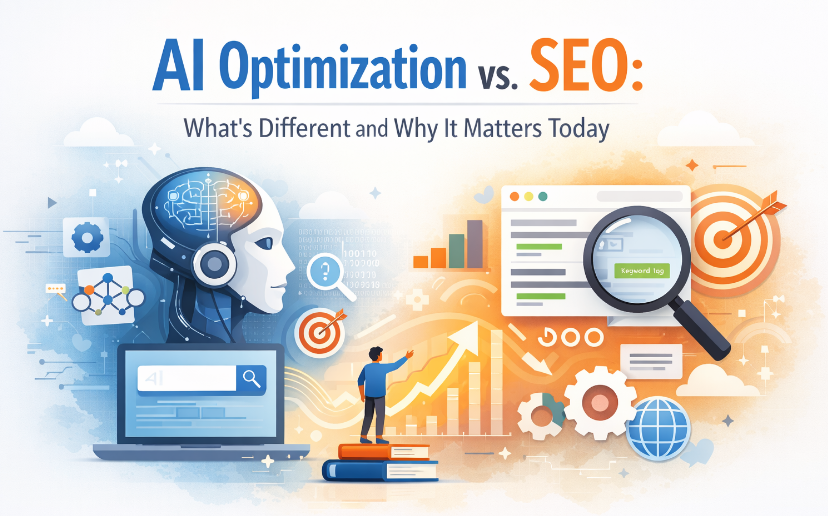
What Is AI Optimization?
AI optimization is the practice of structuring content so artificial intelligence systems can easily understand, extract, and reuse it when generating answers.
Unlike traditional search engines that rank pages, AI systems:
-
Analyze meaning and intent
-
Summarize information
-
Generate conversational responses
AI optimization ensures your content is clear, contextual, and trustworthy enough to be selected as a source.
Example
If a user asks an AI assistant:
“What’s the difference between AI optimization and SEO?”
An AI-optimized article:
-
Clearly defines both concepts
-
Uses headings and comparisons
-
Provides direct answers
A poorly optimized article:
-
Bury definitions in long paragraphs
-
Focus only on keywords
-
Lacks clear structure
Only the first is likely to be used by AI.
How AI Optimization Differs from SEO
1. Rankings vs. Answers
SEO focuses on ranking web pages in search results.
AI optimization focuses on being selected as a source for AI-generated responses.
SEO wants clicks.
AI optimization wants comprehension.
2. Keywords vs. Context
SEO emphasizes keywords and search volume.
AI optimization prioritizes:
-
Context
-
Topic depth
-
Natural language
Example
SEO-style content:
“AI optimization SEO difference AI optimization vs SEO benefits”
AI-optimized content:
“AI optimization focuses on helping AI systems understand content, while SEO is designed to improve visibility in traditional search results.”
3. Traffic vs. Trust
SEO success is measured by traffic and rankings.
AI optimization is driven by:
-
Accuracy
-
Authority
-
Clarity
AI systems prefer content that:
-
Answers questions directly
-
Avoids exaggeration
-
Demonstrates expertise
4. Pages vs. Structured Knowledge
SEO can work with loosely organized pages.
AI optimization thrives on structure:
-
Headings (H2, H3)
-
Bullet points
-
FAQs
-
Definitions
-
Summaries
-
Schema markup
This helps AI “understand” and reuse your content correctly.
Is AI Optimization Necessary?
Yes—and increasingly so.
1. AI-Powered Search Is Growing
Search engines now display AI summaries before organic results. If your content isn’t optimized for AI understanding, it may never be seen.
2. Users Ask Questions, Not Keywords
People now search like they speak:
-
“Is AI optimization worth it?”
-
“How is AI optimization different from SEO?”
AI optimization aligns content with natural human questions.
3. Early Movers Gain Authority
AI systems learn over time. Brands that publish clear, authoritative content early are more likely to become trusted AI sources in their niche.
4. SEO Alone Is No Longer Enough
SEO brings users to your site.
AI optimization ensures your content still matters when users never click at all.
The two work best together, not separately.
How to Optimize Content for AI (Practical Examples)
Example: Turning SEO Content into AI-Optimized Content
Before (SEO-only):
-
Long paragraphs
-
Keyword-focused headings
-
No direct answers
After (AI-optimized):
-
Clear definitions at the top
-
Question-based subheadings
-
Bullet points and summaries
-
FAQ section answering common questions
Simple AI Optimization Checklist
-
Use conversational language
-
Answer “what,” “why,” and “how”
-
Add FAQs
-
Avoid filler content
-
Keep explanations factual and concise
Suggested Visuals to Add to the Article
You can enhance engagement by adding visuals such as:
-
Comparison Table Graphic
SEO vs AI Optimization (Rankings vs Answers, Keywords vs Context) -
Flow Diagram
Traditional Search → Click → Page
AI Search → Understanding → Generated Answer -
Illustration
A chatbot pulling information from structured content blocks -
Checklist Graphic
“AI Optimization Best Practices”
Final Thoughts
AI optimization is not replacing SEO—it’s evolving it.
As AI increasingly controls how information is discovered and delivered, optimizing your content for AI understanding is becoming just as important as optimizing for search engines.
If visibility, relevance, and authority matter to your business, AI optimization is no longer optional—it’s strategic.
Share this article on