
In 2026, artificial intelligence (AI) has moved far beyond buzzwords and pilot projects. For marketing teams, maturity in AI isn’t simply about using tools — it’s about how deeply and strategically AI is integrated into every aspect of their operations. The companies that win today aren’t just using AI — they’re built around AI-enhanced workflows, data, and decision-making.
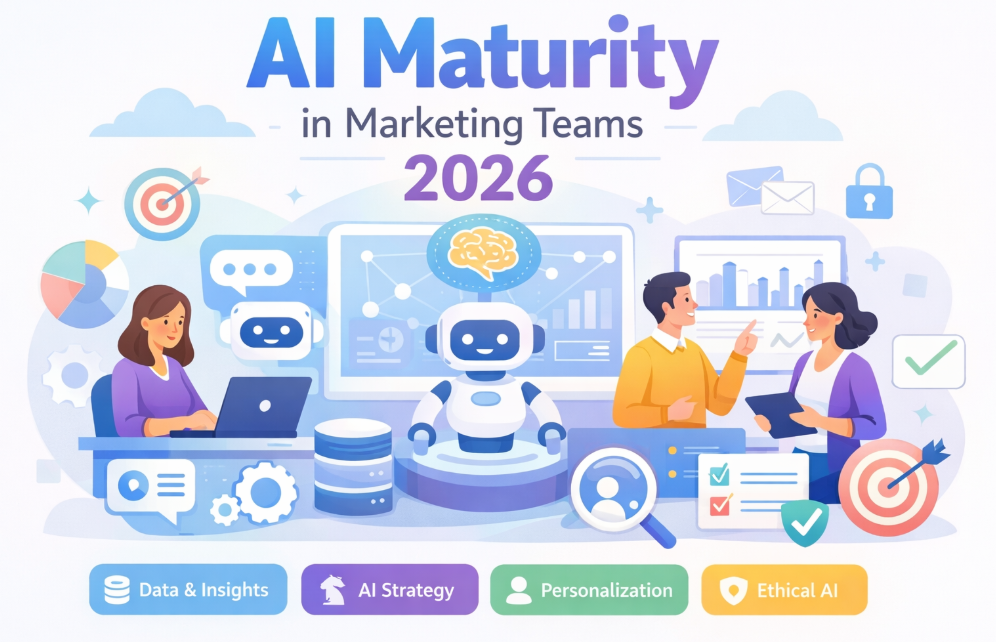
1. AI Is Embedded — Not Optional
By 2026, AI is fully integrated into marketing workflows—from personalization and content to analytics and testing. It’s no longer a tool, but a core part of how teams operate and improve results.
2. Data Is the Foundation
Mature teams rely on clean, centralized, and well-governed data. Real-time insights and a single source of truth power better personalization and smarter decisions.
3. AI Drives Strategy
AI goes beyond automation to shape strategy—guiding targeting, messaging, pricing, and investment decisions through predictive insights.
4. Teams Are AI-Skilled
AI maturity requires skilled people. Marketing teams now include data experts, prioritize AI literacy, and collaborate closely with technical teams.
5. Personalization with Ethics
Advanced teams deliver personalized experiences while respecting privacy, using transparent and consent-driven data practices.
6. Continuous Optimization
With real-time feedback loops, AI models constantly learn and improve, allowing campaigns to adapt quickly and perform better.
7. Responsible AI Is Essential
Ethics, bias monitoring, and governance are standard. Trust and accountability are key expectations in 2026.
8. ROI Is Measurable
AI maturity leads to clear results—higher ROI, reduced churn, and faster execution—making its business impact undeniable.
Conclusion
AI maturity means combining strong data, smart strategy, skilled teams, and ethical practices. In 2026, the most successful marketing teams are those built around AI—not just using it.
Share this article on